"Borisav Bora Stankovic - a name we proudly bear" (Gymnasium "Bora Stankovic" Bor)

Bora's Week, which is traditionally celebrated as our school “day” with special program and various activities, will be commemorated this year in a slightly changed form due to the current situation. The pupils of our school (which proudly bears the name of this great person) made an effort to find and prepare interesting things about Bora's life and work, to jointly express the opinion and interpretation of his work. In addition to the biographical elements, in the text to follow is the description of what characterizes his work, what was he famous for, what he told others, and what was the attitude of the city authorities to him after his death...
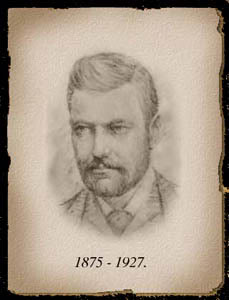
Borisav Stankovic was born in Vranje in 1875. Early on, he lost his parents and grew up with grandma Zlata and her stories of old times. After high school in Vranje and Nis, he completed the university of law in Belgrade. He worked as a state clerk for jobs that had nothing to do with his literary affinities and ambitions. Tied to the homeland, namely the homeland of the time that passed, Stankovic found the themes for his stories, novels and plays. He had no affinity for contemporaneity and contemporary developments, much less for new literary trends - he remained out of modern times, in the world of his old town of Vranje. He plunged into the past and there he found unhappy people, misfortunes, eternal sufferers. He entered the literature quietly, with the collection “From an Old Gospel” (1899), which, by an archaic title, did not attract significant attention. Only his short stories published in magazines and newspapers and the collections “The Old Days” (1902) and “God's Children” (1902) will present Stankovic as the strongest storytelling talent ever in Serbian literature (Jovan Skerlic).
“Impure Blood” (1910) further reinforced the belief that extraordinary narrator appeared in Serbian literature. In addition, two unfinished novels, “The Boss Mladen” and "Singers," remained behind Stankovic. The drama “Koštana” (1902) was a success and introduced Stankovic as a playwright. However, even later plays Tašana and Jovce did not provide Stankovic with a place as a significant playwright. Attacked by his co-operation in the occupation newspaper during World War I, Stankovic withdrew, stopped creating and died, lonely and disappointed, in 1927 in Belgrade.
The work of Bora Stankovic is exclusively related to Vranje, its climate and its people, but not to Vranje of the writer’s time, but to the passing times and the time of transition from old to new social relations. That is why this time was filled with social upheavals and personal dramas, well noticed and masterfully transformed into short stories, novels and dramas by Stankovic's creative insight. He has dithyramb images of chanting beauty, the joy of living and personal happiness; he has unhappy loves and tragic lovers, wrongfully lived lives and an eternal regret for youth; he has rich and mighty, weak and powerless, small and full, as well as cowardly and hungry people of God. On one hand there is youth, with all that it entails and demands from life, and on the other is everything that this life, which must live, denies and takes away.
After Svetolik Rankovic, Borisav Stankovic was the first Serbian writer to introduce special, striking and temperamental female characters into literature. Stankovic's female characters are, each for themselves, original and unusual: Sofka, Koštana, Nuška, Anica. It was as if Stankovic's female intimacy was a taboo topic; women were just a part of everyday life, wives and mothers. With Stankovic, women's beauty gained a prominent place; women's longings and trembling sensuality, first found a place in artistic prose; for the first time, internal unrest and stirring passions were clearly spoken.
Bora Stankovic died unhappy; more specifically, outraged. Perhaps the best thing about the state of his spirit before death is the sentence he spoke to Ivo Andric, which he wrote: “Beware, Ivo! Thieves felt you had talent. They will hate you as much as they hate me. They're going to set you up to get you out of service and put you in jail, behind bars!”
The story of his funeral, told by his granddaughter Zora: “When my grandfather died, they came to their grandmother to tell her that it was decided at the city level that he will be buried according to the first category, as it was then called. The grandmother said she didn't mind, but warned she didn't know if she could pay it. She was told that it was a place of honor and that the city of Belgrade was paying everything. And everything was as agreed. Soon afterwards, Grandpa's books were printed, along with the diary “Under Occupation”. When that book came out, some people, not any but the high authorities, recognized themselves in it. And Grandma receives the bill to pay for the grave and the funeral! At first class fare! They agreed to make her pay in installments! ”
See а TV adaptation of "Kostana"


- Total Visitors: 735702


Comments
fyc
Fri, 03/27/2020 - 12:57
Permalink
from project manager